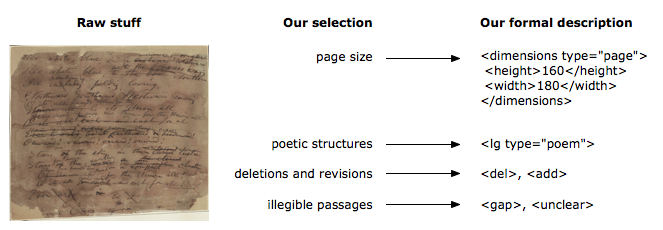
Languages like the TEI serve as a kind of intermediary between the brute stuff of the world and the formal analytics of a research process. The TEI recognizes that not all documents are going to exactly follow the models that we set up for them, so it navigates between creating a highly-constrained idealized model of the document, and a loose model in which anything is possible. Think of it as negotiating between prescriptivist and descriptivist grammar. So, based on research aims, we select the parts of the text that are of interest to us. We then describe them using a set of formal descriptors. Then we regulate and constrain (to some extent) our descriptions according to our expectations about genre and document structure.
So although it looks as if what we’re doing here is reproducing a text, we are, in fact, selectively and strategically modelling it. We’re creating a surrogate or proxy, which functions sort of like a different projections of a map: each with selective and useful omissions and distortions.